



Ever watched your cat scratch themselves raw and wondered if their dinner bowl might be the culprit?
You're not imagining things. Food sensitivities are one of the most common reasons cats develop itchy, uncomfortable skin. The tricky part? The symptoms can take months to show up, making it hard to connect the dots between what they're eating and why they're scratching.
Here's the good news: switching to the best raw food for cats could be the answer you've been searching for.
Let's dive into the 7 telltale signs that your cat's skin issues might be food-related: and how raw feeding could turn things around.
Is Your Cat Scratching All Year Round?
Seasonal allergies come and go. Food allergies? They stick around like an uninvited houseguest.
If your cat is constantly scratching, licking, or nibbling at their skin: regardless of whether it's summer or winter: food could be the trigger. Unlike environmental allergies that flare up during pollen season, food-related itching is relentless and consistent throughout the year.
The itching typically concentrates around the head and neck, but can spread to other areas too. Your cat might look uncomfortable, restless, and unable to settle because the irritation just won't quit.

Have You Noticed Bald Patches or Thinning Fur?
When cats get itchy, they groom. A lot.
Excessive licking and scratching can lead to noticeable hair loss, particularly on the belly, legs, and around the neck. The fur might look patchy, thin, or completely bare in spots. What starts as your cat trying to soothe their irritated skin ends up making the problem more visible.
This over-grooming isn't vanity: it's desperation. Your cat is trying to find relief from the constant discomfort caused by inflammatory reactions to certain proteins in their food.
Raw feeding offers human grade ingredients that are less likely to trigger these reactions, giving your cat's coat a chance to recover and flourish.
Does Your Cat Have Crusty Spots or Red Patches?
Look closely at your cat's skin. Do you see tiny scabs that feel like grains of sand? Vets call this "miliary dermatitis," and it's a classic sign of food allergies.
These small, crusty lesions often appear along the back, neck, and face. The skin might look red, inflamed, or irritated in patches. Sometimes you'll notice sores or raised bumps that look angry and uncomfortable.
Food allergies trigger an inflammatory response in the skin, causing these visible reactions. The most common culprits? Animal proteins like chicken, beef, and fish: ironically, the same proteins found in most commercial cat foods.
This is where quality matters. Nutritionally complete raw recipes use simple, identifiable ingredients that your cat's system can actually recognize and process properly.
Are Their Ears Acting Up?
Your cat's ears can tell you a lot about what's happening inside their body.
Food allergies often show up as ear problems: redness, excessive wax buildup, unusual odor, or constant head shaking. Your cat might scratch at their ears obsessively or hold their head at an odd angle.
If you've been treating ear infections on repeat with little success, it might be time to look at the food bowl rather than just the medicine cabinet. Chronic ear issues that don't respond well to treatment are often connected to dietary triggers.
Is Your Cat's Face or Paws Swollen or Red?
Check your cat's face and paws. Are they puffy, red, or inflamed?
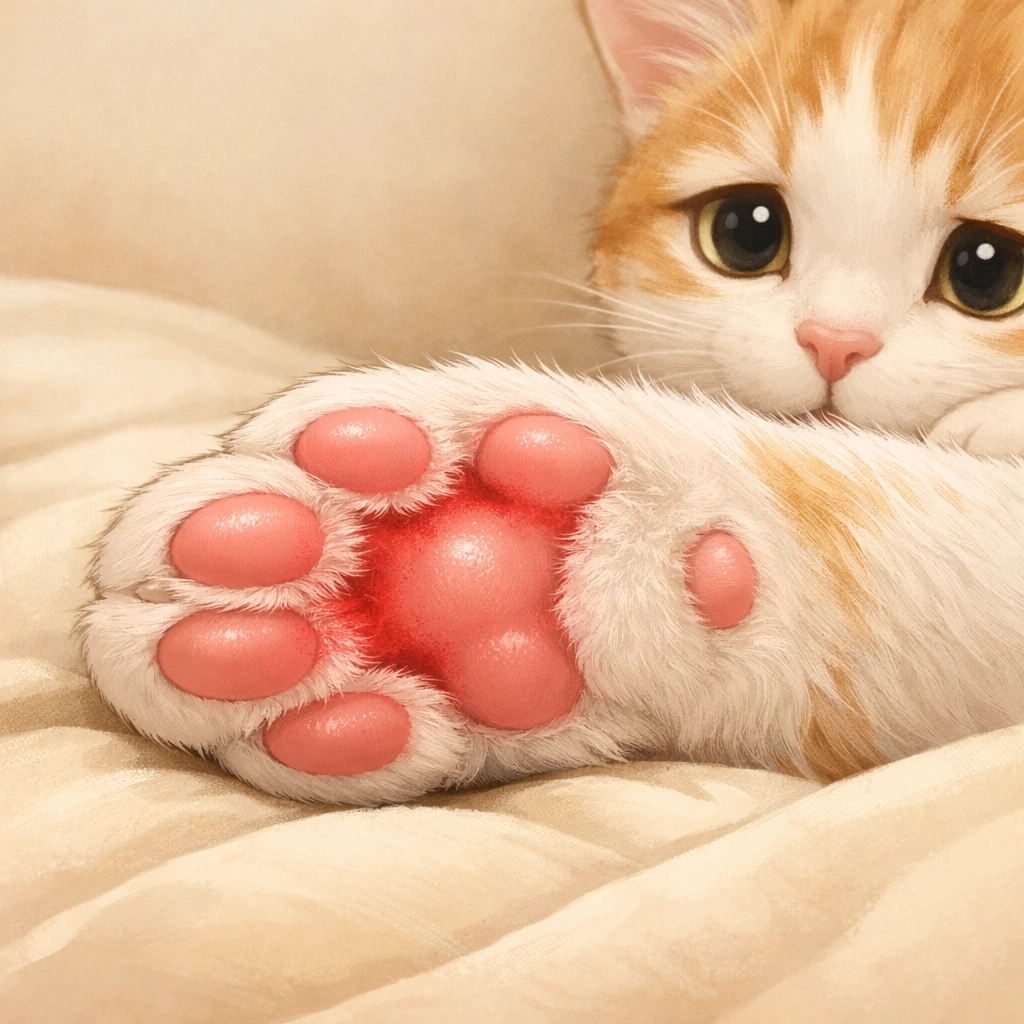
Facial swelling and paw inflammation are surprisingly common with food sensitivities. Your cat might lick or chew at their paws constantly, causing redness between the toes. Their chin or muzzle might look swollen or irritated.
This inflammation happens because the immune system goes into overdrive when it encounters problem proteins. It's essentially a false alarm: your cat's body treating normal food as a dangerous invader.
The best raw food for cats works differently. With simple, species-appropriate ingredients, there's less chance of triggering these inflammatory responses. Your cat's immune system can relax, and the swelling subsides.
Does the Itching Come with Tummy Troubles?
Sometimes food allergies don't just affect the skin: they mess with digestion too.
If your cat is scratching AND dealing with vomiting or diarrhea, that's a pretty strong indicator that food is the problem. Not all cats with food allergies have digestive symptoms, but when both show up together, the connection becomes harder to ignore.

The proteins in heavily processed commercial foods can be difficult for some cats to digest properly. This leads to both skin reactions and gastrointestinal upset: a double whammy of discomfort.
Raw feeding puts the focus back on what cats are biologically designed to eat. Human grade meat, bone, and organ blends that mirror what they'd catch in the wild. No mysterious additives or heavily processed proteins that their systems struggle to handle.
Have Medications and Special Diets Failed?
Here's the frustrating part: you've probably already tried everything.
Special hypoallergenic kibbles. Steroid creams. Antihistamines. Maybe even prescription diets that cost a fortune. And yet… your cat is still scratching.
If nothing seems to provide lasting relief, it might be because those solutions are treating the symptoms rather than addressing the root cause. Your cat needs a genuine dietary reset: not just a different flavor of the same processed format.
This is where raw feeding shines. It's not about adding more supplements or medications. It's about getting back to basics with nutritionally complete recipes made from ingredients your cat's body actually recognizes as food.
Why Raw Feeding Makes a Difference
So what makes raw food different?
First, it's simple. You know exactly what's in it: muscle meat, bone, organs. No mystery ingredients hiding in tiny print. When you feed human grade ingredients, you're giving your cat recognizable proteins that are easier to digest and less likely to trigger allergic responses.
Second, raw food is species-appropriate. Cats are obligate carnivores. They're built to thrive on meat, not grains, fillers, or plant-based proteins. When you align their diet with their biology, their whole system works better: including their skin.
Third, nutritionally complete raw recipes provide everything your cat needs without overloading them with additives or synthetic supplements that could contribute to sensitivities.
The proof is in the transformation. Cat owners consistently report shinier coats, reduced scratching, and healthier skin after switching to raw. It's not magic: it's just feeding cats what they're meant to eat.

Making the Switch Isn't Scary
If you're worried about transitioning to raw feeding, breathe easy.
Most cats adapt beautifully, especially when they're motivated by feeling better in their own skin (literally). Start slowly, mixing small amounts of raw food with their current diet, and gradually increase over 7-10 days.
Our transition guide walks you through every step, so you'll never feel lost or overwhelmed. And if you have questions? Check out our raw FAQs for honest answers to everything you're wondering.
The best part? You might start noticing improvements within weeks. Less scratching. Softer fur. A happier, more comfortable cat who finally feels like themselves again.
Your Cat Deserves Relief
Food allergies are frustrating, uncomfortable, and exhausting: for both you and your cat.
But here's the thing: you don't have to just accept constant scratching as part of life. If you're seeing any of these 7 signs, it's worth exploring whether the best raw food for cats could be the solution you've been searching for.
With human grade ingredients and nutritionally complete recipes designed around what cats actually need, raw feeding offers a fresh start. A chance to reset your cat's system and give their skin the relief it's been begging for.
Ready to see what raw can do? Browse our complete range and find the perfect match for your itchy, uncomfortable cat. They'll thank you( probably by scratching a lot less.)